
In This Issue:

Winter 2026
In This Issue:
Director’s Corner
I am pleased to report that the state of your retirement system is good, and the financial condition continues to set high marks.
The Actuarial Valuation Report as of July 1, 2025, shows our actuarial funded ratio at 107.8%, the highest in the history of the fund and one of the highest in the country. The investment returns for the fund have been among the highest of all public pension plans of similar size in the country for the last three fiscal years.
Our Board of Trustees have been great stewards of the fund and have consistently applied the fund’s long-term investment philosophy of maintaining a diversified portfolio at the lowest cost possible. By adhering to this philosophy, OPERS has saved about $30 million per year on average in investment manager fees over the past 14 fiscal years compared to the average fee reported by peers from the National Conference of Public Employee Retirement Systems. Instead of giving these fees to Wall Street, we put these savings back into the Plan where it remains invested for the future. Because that fee savings remains invested, it continues to grow. We estimate the fund has benefited from this compounded impact of fee savings to the tune of nearly $600 million over the last 14 fiscal years compared to our peers. This impressive result has not disadvantaged the Fund from a performance perspective, as our performance has been better than most peers but at a fraction of the cost.
The OPERS staff have also been on the award stand in 2025. The Plan received the GFOA Award for Outstanding Achievement in Financial Reporting for both the Annual Comprehensive Financial Report, prepared by our Financial/Accounting team, and the Popular Annual Financial Report, prepared by our Communications team. This is the 28th consecutive year for the team to receive the award for the Annual Comprehensive Financial Report, and the 18th consecutive year for the team to receive the award for the Popular Annual Financial Report.
But that’s not all. The Plan also received, for the 15th consecutive year, the Public Pension Coordinating Council’s Standard Award for Funding and Administration for 2025. This award recognizes outstanding achievement and excellence in meeting professional standards for management, administration, and funding of public plans.
As I reported in our last newsletter (Summer 2025), the legislature will likely be considering COLAs this legislative session. There are three bills to watch: HB 2193 (scaled COLA based on retirement date and capped), SB 90 (2% COLA), and SB 172 (2% COLA based on Plan’s funded ratio and allows boards of state pension systems to approve). Each of these bills are in the respective pension committees in the House and Senate. We will continue to keep you informed of any action on these bills through our website as the legislative session progresses.
Your Executive Director,
Joe Fox
Popular Annual Financial Report (PAFR)
You can view the most current Popular Annual Financial Reports for OPERS and URSJJ for Fiscal Year Ended June 30, 2025 on our publications page.
Maximizing Your Retirement Dollars
It can be tough saving for a future retirement while managing today’s expenses. Yet every dollar you save now has the potential to grow into much more down the line. The following tips might help you make every dollar count and build your retirement savings for the years to come.
Free up your budget
The first step to maximizing your savings is to take a close look at your current budget. Which categories have increased the most? Are there ways to trim those costs?
- A few low-cost subscriptions can quickly reach $100 a month. Trimming those down may free up hundreds of dollars a year.
- Audit your household energy usage. Simple fixes like sealing drafty windows or swapping out energy inefficient lightbulbs can help you keep more of your hard-earned money.
- Look for spending patterns and limit shopping trips or eating out. Even small purchases can really add up when they become habit.
By monitoring your spending and sticking to a budget, you can rest assured you aren’t wasting surplus dollars on trivial purchases.
Develop a few homesteading skills
Practical hobbies can be fun and boost your mental health while freeing up a bit of your budget!
- Seek out your local ‘Library of Things’ for tools and gadgets you can check out to use in DIY projects at home.
- Try growing a few plants each season. For smaller spaces, tomatoes can be grown in a pot, and herbs can thrive on a windowsill.
- Learning to can and preserve food extends the shelf life of produce to enjoy beyond harvest season.
- Basic sewing skills allow you to repair your favorite shirts and jeans. Sewing not only extends the longevity of clothing, but it provides the skillset to tailor thrifted items.
Find free or low-cost entertainment
It isn’t hard to find fun for free if you know where to look!
- Check out your city’s social media and look for ways to enjoy your community. Depending on the season, there are often outdoor events for free movies or live music.
- For those frosty winter months, local libraries have a rich resource of indoor activities offering books, videos, workshops, book clubs, and classes you can enjoy at no cost. Many have ways you can “check out” a free pass to local museums and art galleries.
- Travel and tourism web pages can point you to local trails and scenic nature to enjoy. You might be able to find hidden treasures just around the corner.


The Power of Yoga
Yoga is for all
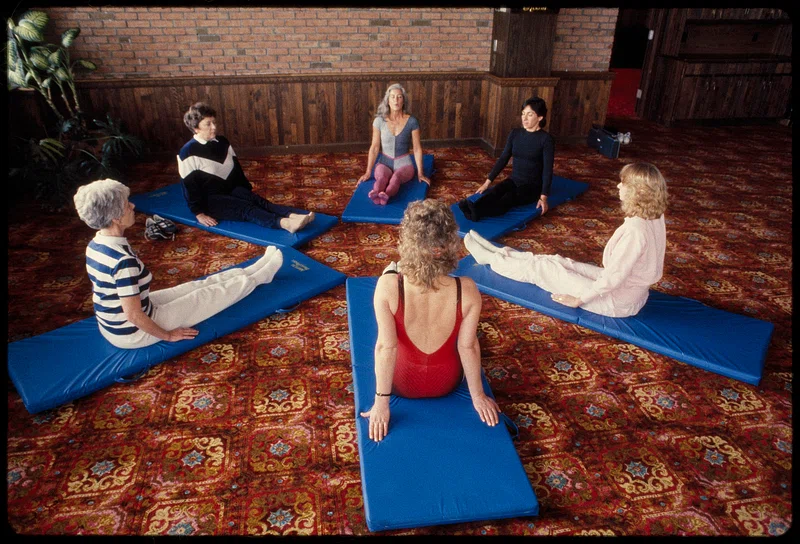
If you don’t know much about yoga, you might have the impression that it is only for people who can contort their bodies into difficult poses and stand on their heads. However, yoga is a practice that is accessible for all bodies and all fitness levels. Gentle yoga can be used to stay limber, strengthen joints, decrease anxiety and stress, and improve mood. Yoga is practiced worldwide for its physical, mental, and emotional benefits.
Yoga supports joints and flexibility
Yoga supports joint health by improving flexibility and reducing inflammation with gentle, low-impact poses. A simple forward fold strengthens hips and knees and supports leg flexibility. The Child’s pose, a kneeling position with outstretched hands, is a great stretch for connective tissue – especially for those with knee and low back pain.
Mental health benefits
While it’s known that yoga can be good for our physical bodies, it’s not as commonly understood that yoga has numerous benefits for mental health. Yoga improves mood by increasing brain chemicals like GABA, serotonin and dopamine. Coupled with stretches, yoga encourages participants to concentrate on their breathing, which has been shown to promote mental clarity and a sense of well-being. Deep breathing, when done slowly, can activate the parasympathetic nervous system and induce an even calmer state of mind.
According to Harvard Health Publishing, studies using MRI scans and other brain imaging technology have shown that people who regularly did yoga had a thicker cerebral cortex (the area of the brain responsible for information processing) and hippocampus (the area of the brain involved in learning and memory). There have even been studies showing that yoga can help with post-traumatic stress disorder (PTSD).
Friendly options for the less-mobile
Individuals that are less mobile can try chair yoga – a form of yoga with simple, gentle stretches that you can do from seated in a chair. Restorative yoga is another type of yoga for those looking to reap the mental benefits of yoga without pushing their bodies too hard. Yoga isn’t only for the young and fit acrobats among us – it’s for everyone who can stand to benefit to take a moment, reflect, and take a deep breath in and out.
Newsletter Q&A – How Can I Prepare for Retirement?
I’m saving money for retirement – what else can I do to be prepared?
It’s important to find out what your employer is willing to match in retirement contributions and fully capitalize on it. An employer match is essentially free money added into your retirement account. If your employer offered to give you a raise, you wouldn’t turn down the free money – so why not take advantage of free savings for your financial future?
As you’re building your retirement fund, having an updated beneficiary is a must. We all want to live a long, happy life and have an extended, well-funded retirement, but sometimes life has other plans. Listing a beneficiary is an easy process and ensures that if something happens to you, your money is given to the person or people you want. Revisit your beneficiary throughout your life – who you choose at the beginning of your career may not be the same person you’d choose at the end of it.
I have exciting plans for what I want to do in retirement, but I’m worried my savings won’t cover it. How much savings is enough?
No one has ever been disappointed because they saved too much for retirement, so aiming high is always a good decision. When determining what, exactly, is a good number there are many factors you need to weigh. Once you retire, expenses don’t magically stop, and you’ll be responsible for funding essential needs like shelter, food, clothes, taxes, insurance and healthcare.
If you want to thrive in retirement, chances are you’ll also incur extra expenses for things like traveling, exploring hobbies, eating out, going to the movies, and buying gifts for your loved ones. Consider the lifestyle you want to live in retirement, examine what that might cost, and begin planning accordingly. The earlier you start saving, the easier it will be to reach your goals!
Have a topic you’d like us to cover in a future newsletter? Send us a newsletter question!
Retirement in Pop Culture
Retirement is a stage of life experienced by nearly everyone. It’s an experience portrayed in pop culture and Hollywood films for decades. What can we learn about the retirement journey from the big screen? While some may be excited and ready for this next phase of life, others may dread the loss of identity or purpose they glean from their working careers.
- While he did not offer a specific or concise quote about retirement in the conventional sense, one of Gene Kelly’s final filmed words in 1994’s That’s Entertainment III was a poetic summary of his perspective. Quoting Irving Berlin, he reminds us that retirement isn’t the end; it’s a continuation of life.
“The song has ended, but the melody lingers on.”
- The beloved classic TV show The Golden Girls portrays retirement as a fun and adventurous time with friends. Golden Girls is responsible for many of us who grew up watching to consider moving in with a few friends in retirement for companionship, laughter, and adventures.
“Retirement is not in my vocabulary. They aren’t going to get rid of me that way.”
- In Toy Story, a group of toys must navigate their lives as the belongings of their owner Andy. As he grows up and goes to college, Andy effectively ‘retires them’ to the darkness of closet storage. The group struggles with their identity as toys without an owner, just as some retired members struggle with their identity outside of their life-long career.
“Andy’s moving on, Woody! It’s about time we do the same.”
- Main character Forrest Gump runs across the country for several years. After attracting a large audience, he suddenly stops and gives a retirement announcement to everyone’s shock: “I’m pretty tired…I think I’ll go home now,” showing us that sometimes the decision to retire comes upon us suddenly.
“I’m pretty tired…I think I’ll go home now.”
- A favorite Oklahoman reminds us that retirement isn’t the end, it’s the beginning of something new.
“Often when you are at the end of something, you’re at the beginning of something else.”
All About Step-Up
Looking for ways to increase your retirement benefit? Step-Up is one solution that could increase the amount you’ll receive each month once you retire.
For a normal retirement, your monthly benefit is calculated by multiplying your years of service by your salary, and then by a computation factor of 2%. If you opt in to Step-Up, your contribution factor will increase to 2.5% for full years of participation.
So, what does that mean?
For every full year you are in Step-Up, your monthly benefit will increase by half of a percent.
How does that affect my paycheck?
To participate in Step-Up, you increase the amount that is taken out of each paycheck. Current legislation requires an additional 2.91% of your paycheck. For example, if your standard contribution rate is 3.5 percent, with Step-Up, it would increase to 6.41 percent (3.5 +2.91).
How do I know if I’m eligible for Step-Up?
All actively participating OPERS members are eligible for Step-Up, except for hazardous duty members contributing at the hazardous duty rate and elected officials who were first elected or appointed before November 1, 2011.
How do I sign up?
Signing up is easy, just reach out to your retirement coordinator and they’ll help you fill out the form. Before you decide be sure you’re absolutely certain – signing up for Step-Up is an irrevocable decision. If you choose to participate in Step-Up, you will always participate in Step-Up, even if you change jobs or have a break in service.
For more information on Step-Up, view the Step-Up flyer.
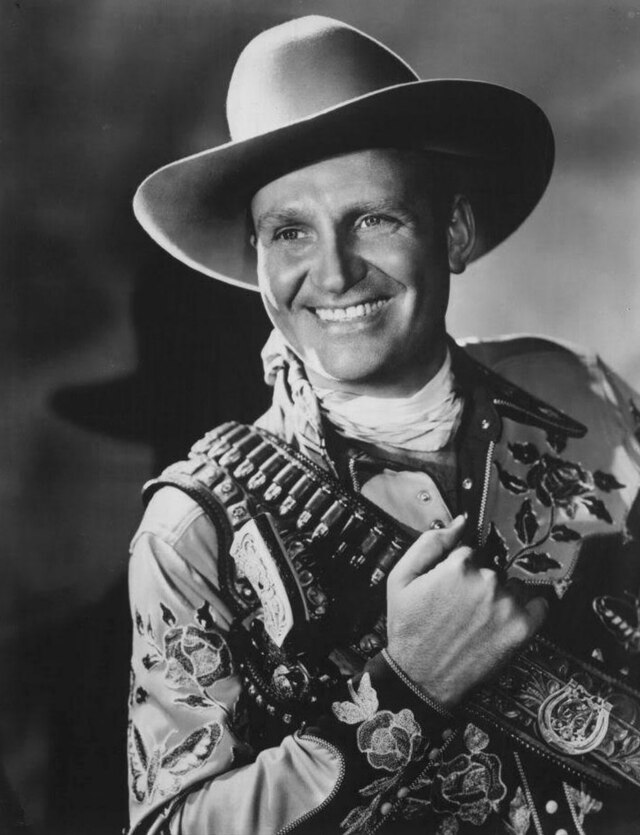
OPERS mixed up their Genes! In our Summer 2025 Newsletter, we highlighted the town Gene Autry, Oklahoma and got our famous singin’ actors confused! Gene Autry is our beloved Singing Cowboy and the town namesake, and it’s Gene Kelly who was Singin’ in the Rain. We are sorry for the confusion, and thankful to have heard from many of you about our error. Even if it’s due to a blunder, we love hearing from our members! Provide feedback for our newsletters at any time at newsletter@opers.ok.gov.
2026 Spring and Summer Seminar Schedule
OPERS is bringing our in-person Pre-Retirement Seminars near you. And by popular demand, we are continuing to bring webinars to view online. You can view the schedule and sign up at opers.ok.gov/opers-seminar-schedule.
Photographs used in our digital newsletter are sourced from Wikimedia Commons and open for free use.